
Some Stories Surface Unexpectedly
The Moment a Son Saw His Father Escape a Sinking Ship

Imagine watching television and seeing the young face of your father from 1956.
July 26, 2026 is the 70-Year Anniversary of the sinking of the Andrea Doria.
Years ago, Piero Boccarossa watched a documentary about the Andrea Doria, the Italian ocean liner that sank off the coast of New York in 1956. It’s a topic he knew well.
His dad had been a 17-year-old passenger on the ship.
As he watched the grainy film, he caught the fleeting glance of a young man leaning on the railing of the rescue ship, watching the Andrea Doria sink into the cold Atlantic. He was dumbstruck.
“Oh my God. That’s him,” Piero said. “I felt that pit in my gut as my dad looked right into the camera across all those years. . . into my face.”
That night, his father, Ugo Boccarossa, then an old man, had a chance to watch the special documentary himself at his son’s house in Dearborn.
Secrets of the Dead commemorates the anniversary of the crash between the Andrea Doria and The Stockholm. Ugo was one of a couple hundred survivors still alive at the first showing. He is now deceased.
Ugo was coming to America by himself to escape war-torn Central Italy back in ‘56. WWII bombs had charred the ground so that not much would grow there. Chemicals filled the air, and the ports opened for opportunities elsewhere.
A hungry 17-year-old boy with no prospects jumped at the chance to go to another country. He left his family for the eight-day journey from Naples to New York to eventually meet his brother in Detroit for work.
Just two nights before the accident, the crew of the Andrea Doria instructed some 2,200 passengers what to do in case of an emergency.
Ugo woke in the bowels of the boat that night with water rising to his bunk.
“I heard screaming and felt water all around me,” he said.
He reached for the life jacket and immediately strapped the laces and wondered,
How long can I last with this. I can’t tread water forever. He couldn’t swim.
This would surely be his end.
He ran for the stairs, but they were already under water. People caked in oils and engine solvents clambered from the bottom cabins. Finally, the crew cast a rope to pull them up. He was among the last five people saved from steerage.
Ugo bore a wide scar under his right arm from the rope that hauled him to the deck of the ship.
Topside, Ugo was waist deep in water as the boat tipped under. The bodies of victims of the crash lay strewn across the decks, contorted, bloodied from glass, metal or head-to-head collisions, sliding toward him.
“You could hardly walk for all the bodies,” he remembered.
Even in July, 80 miles outside of New York, the Atlantic was ice cold. Ugo waded through debris to crew members who lowered him onto a lifeboat that was overflowing with shivering survivors headed to a rescue ship. No more rafts were available.
The rest of the ride on The Ile de France, Ugo sat absorbing the scene.
“I was like a mummy. I couldn’t speak, just watch.”
Again, bodies covered the deck, alive but battered.
Husbands searched for wives. Mothers screamed for children. Fathers found one child but not the second. Separated families had no way of knowing if the missing had lived or died.
A few had made it to another rescue ship. “I was scared and shaken,” Ugo said. “But not too physically hurt.”
He lost what little he had—just a trunk for clothes, his passport and a few liras. He would arrive in New York with no one to meet him.
In his old age, Ugo still used broken English as he told his story.
“Whaddya gonna do? I had to get to my brother in Detroit and find work.”
He remained thankful to The Red Cross and the Ile de France for rescuing him. They gave him clothes, sent a telegram to his parents in Italy and put him on a train to Detroit the night he arrived in New York. The Red Cross also snapped a photograph that remained framed in his dining room until his death a couple of years ago.
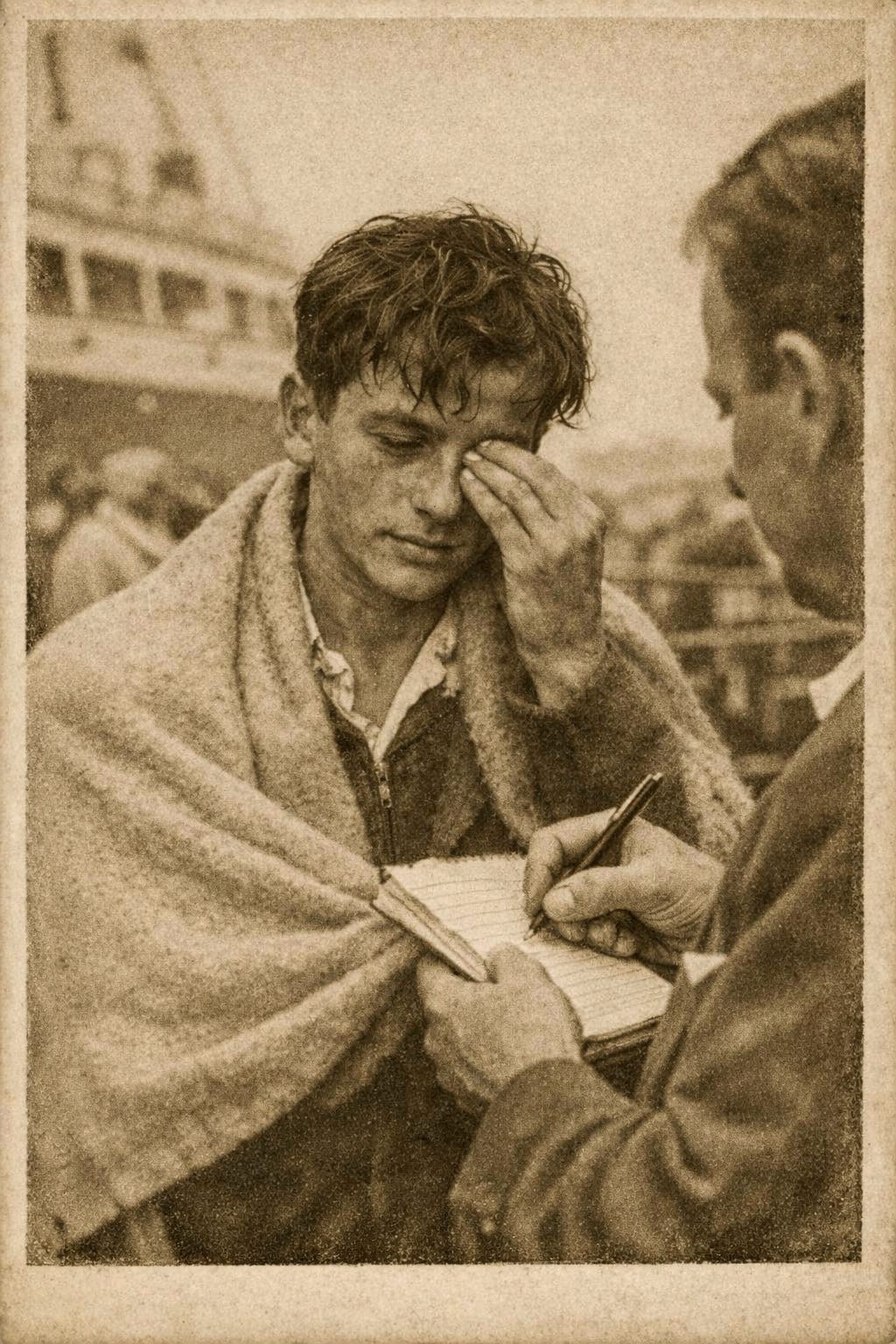
“Tears came out even though I didn’t know I was crying,” he said of the picture.
He remembered the tears pouring for days. Nightmares would plague him for years after—the exact same scene over and over. Water rising around him.
In the photo he is just a kid, lean and bushy-haired. Later, he was stout and bald, donning a mustache. But a son knows his father’s face in spite of the aging. They hoped to catch a glimpse of him again when they watched the program together.
And now, Piero will watch for it this year as the show is likely to replay for the 70th anniversary.
Though Ugo never discussed this ordeal until the last few years of his life, he felt better getting it off his chest; that’s the way with trauma.
Holding it in strengthens it.
Ugo attended an honorary gala back in 2016 and connected with other survivors for a viewing of the documentary.
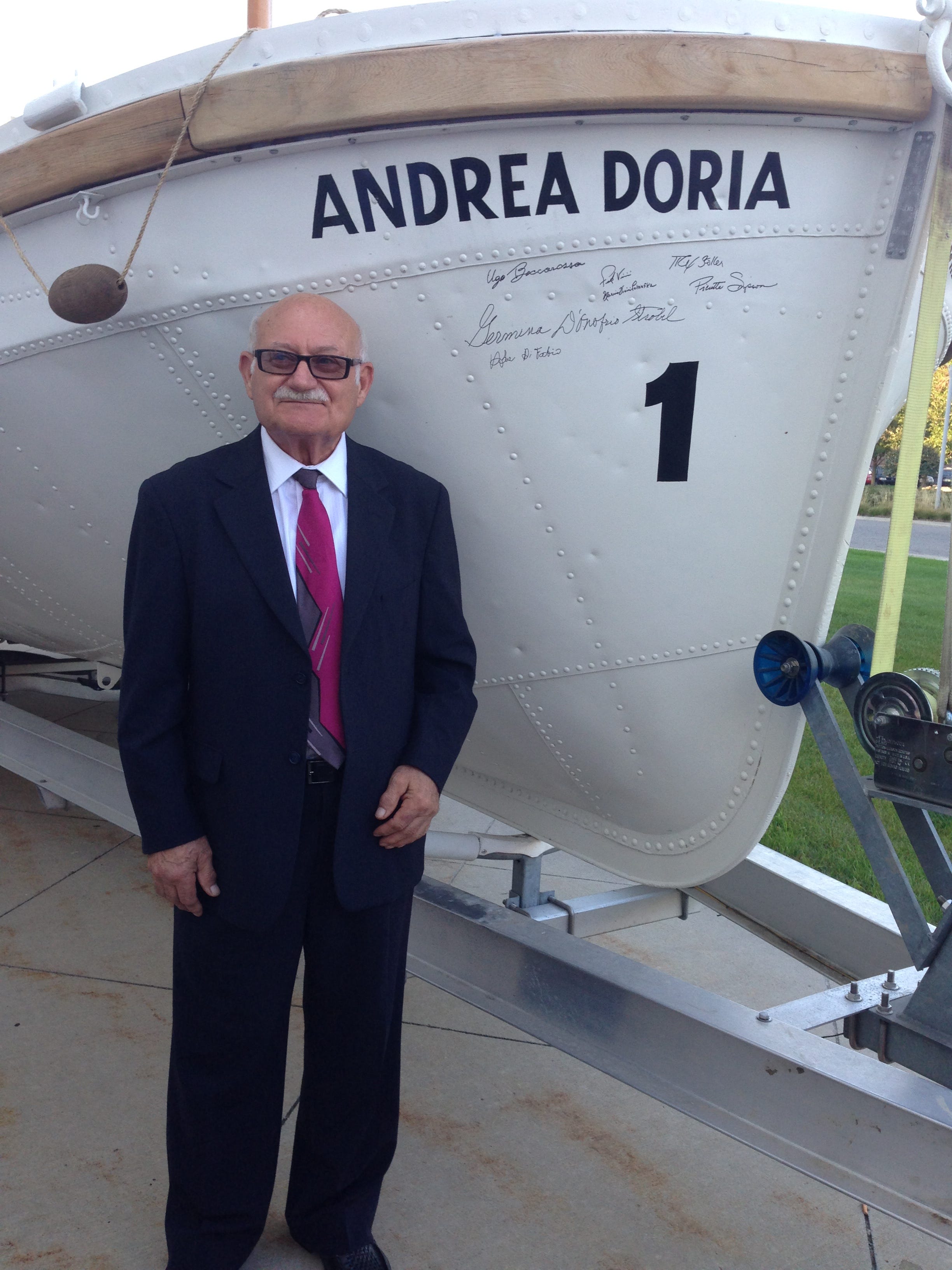
“It’s not hard to watch anymore,” he said. “Yeah, I get emotional maybe, but it was a long time ago. I’m okay now.”


[Family stories take on many forms, and strangely this one, like my others, displays the joy of setting your feet on solid ground. Ugo was a good friend and a wonderful father figure who never got to hear the story of my own father. He would have shrugged his shoulders and said something like, “Oh well. Whatddya gonna do?” I can hear his voice now and the way he said my name.]

[ ❤️ Liking & Sharing helps us readers & writers connect.]
I love this story. Just short enough to read during a work break and long enough to stay with me for the rest of the day, and more. Thanks for sharing.
The part where Ugo woke to water rising around his bunk and still found the strength to keep moving stayed with me long after I finished reading. His quiet “Whaddya gonna do?” at the end somehow says more than a long speech ever could.